
SERVICE AREA / PHOENIX, AZ
Roofing in Phoenix
is many different
roof markets.
Phoenix covers about 518 square miles of land, divided into fifteen urban villages. A postwar ranch in Encanto and a 2005 tile roof in Desert Ridge are both Phoenix addresses, and almost nothing about their roofs is the same.
A USEFUL FIRST QUESTION
“What decade did this roof go on, and what has happened to it since?”
01 / WHEN PHOENIX WAS BUILT
One city.
Seventy years of
building booms.
Most valley cities grew mainly over two or three decades. Phoenix has kept growing in every decade, which is why the city has no one answer to what a roof needs.
| 1950 | 106,818 |
|---|---|
| 1970 | 581,562 |
| 1990 | 983,403 |
| 2020 | 1,608,139 |
There was more new construction in Phoenix in 1959 alone than in the entire period from 1914 to 1946. Maricopa County then averaged close to four percent annual population growth from 1970 to the mid-2000s.
Practically: the roof on your street was built to whatever was normal in its decade, and it has been under this sun ever since. The decade is the first thing worth establishing, and in Phoenix it varies street by street rather than city-wide.
02 / ACROSS THE CITY
Not every
part of Phoenix
is the same age.
01
The prewar core
Encanto-Palmcroft, Willo, Coronado, F.Q. Story
Flat, low-slope and pitched roofs from the 1910s through the 1940s, several roofs deep by now. Many are in historic districts where appearance is constrained as well as construction.
02
Arcadia and the Biltmore area
Central and east, along Camelback
Older housing, much of it heavily remodeled or torn down and rebuilt. Renovation adds roof planes and joints, and joints between old roof and new are where these leak.
03
The 1980s and 1990s ring
Ahwatukee and Deer Valley, plus the 1970s and 1980s parts of North Mountain and Paradise Valley village
The first large wave of concrete tile. The tile is generally fine. If it is original, the felt beneath it is thirty to forty-five years old and was never specified to last that long.
04
The 2000s edge
Desert Ridge, Laveen, Estrella, North Gateway
Tile roofs mostly around 15 to 25 years old. The tile looks new because it is. The underlayment is at the end of its service life, which is a different statement about the same roof.
03 / WHAT THE ROOFS ARE MADE OF
What you
tend to find
in Phoenix.
Concrete tile, roughly 1985 onward
The default on valley tract housing from the late 1980s. Durable, heavy, and only as waterproof as the underlayment carrying it. Most Phoenix tile roofs will outlive two or three underlayments.
Asphalt shingle, mostly pre-1990 and on additions
Common on older central housing and on later additions to it. Shorter service life than tile in this heat, and far more visibly degraded when it is failing, which at least makes assessment easier.
Low-slope and foam, across every era
Postwar Phoenix built a great many low-slope roofs, and carports, patios and added rooms are low-slope in every decade. These are maintained on a recoating cycle rather than installed and forgotten.
04 / WHAT SHOWS UP HERE
The patterns
worth knowing
about.
01
Underlayment that outlived its warranty.
On the 1990s and 2000s tile stock this is the most common single finding. The roof looks sound from the street while the felt underneath has gone brittle and lost its ability to shed water at the laps.
02
Four roofs of history on one house.
Older central Phoenix homes have been re-roofed repeatedly, sometimes with layers left in place. What is under the current surface is often not what the owner was told when they bought.
03
Flashing at every addition.
Phoenix homes get added to. Every added room is a new joint between old roof and new, and those joints admit water long before the field of the roof fails.
05 / WHAT CHANGES THE PRICE
Why two quotes
can differ by
thousands.
01
Which decade the house is from
A 2004 tile roof needing underlayment and a 1955 low-slope roof of unknown layer history are different scopes with different unknowns. The era sets how much can be priced confidently before anything is opened up.
02
Whether the tile can be re-laid
If your existing tile is sound, lifting and re-laying it is substantially cheaper than buying new tile. A proposal should say plainly which it assumes, because the difference is large and it is easy to leave vague.
03
Historic district and HOA constraints
Parts of central Phoenix carry historic-district rules that limit changes of roofing material, and some HOAs also limit color. That is not automatically expensive, but it removes options, and it needs establishing before anything is ordered.
07 / PHOENIX QUESTIONS
Common ones.
How old is the typical Phoenix roof?
There is no typical Phoenix roof, which is the honest answer. The city has kept building since the 1920s, so a house in Willo and a house in Desert Ridge are often seventy years apart. Establish the build decade first and everything else follows from it.
My tile roof looks perfect. Does it still need looking at?
Possibly, and this catches people out. The tile is a rain shield, not the waterproofing. The underlayment beneath does that job, and in Arizona heat it lasts roughly 15 to 25 years. Tile from 2000 is fine. Felt from 2000 is not.
I am in a historic district. What changes?
Usually appearance rather than construction. Changing the roofing material may need Historic Preservation Office approval before work starts; like-for-like replacement generally does not. It is worth settling at the start, because discovering it after materials are ordered is expensive.
Does Atlas work across all of Phoenix?
We work across the Phoenix metropolitan area. Coverage on any particular job depends on the work involved, so the practical answer is to call with the address and we will tell you right away.
When is monsoon damage most likely?
The National Weather Service defines the monsoon as June 15 to September 30. Wind-driven rain is what most often finds an existing weakness, which is why damage tends to appear during a storm rather than be created by one.
My neighbor was told they needed a full replacement. Do I?
Not necessarily, even on an identical house. Orientation, shade, previous repairs and what was done at the last re-roof all vary between neighboring properties. Their roof is a reason to look at yours, not a diagnosis of it.
ATLAS JOB PHOTOS
Recent work in Phoenix.
Photographed on the job. Addresses are never shown. All recent work →
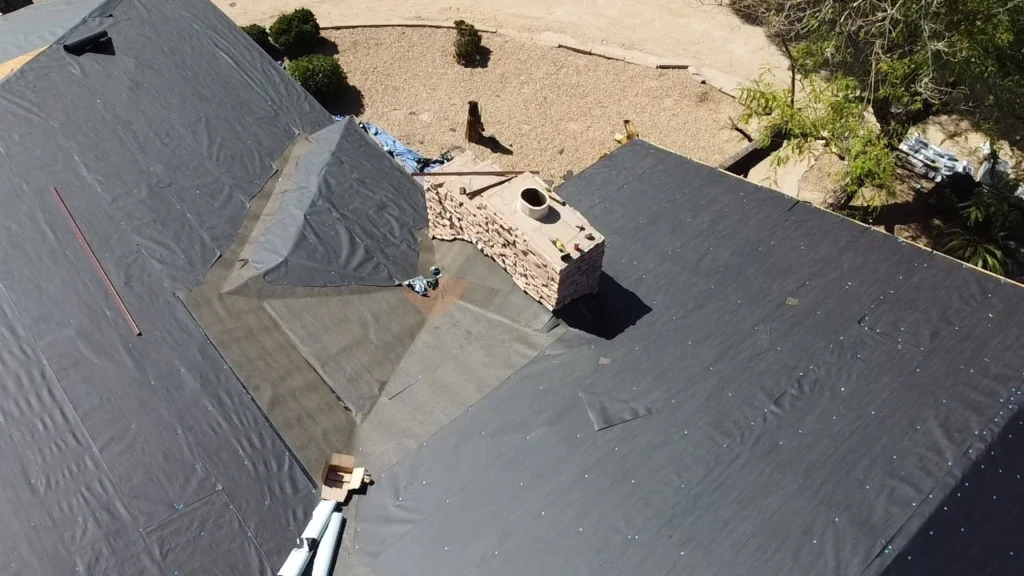
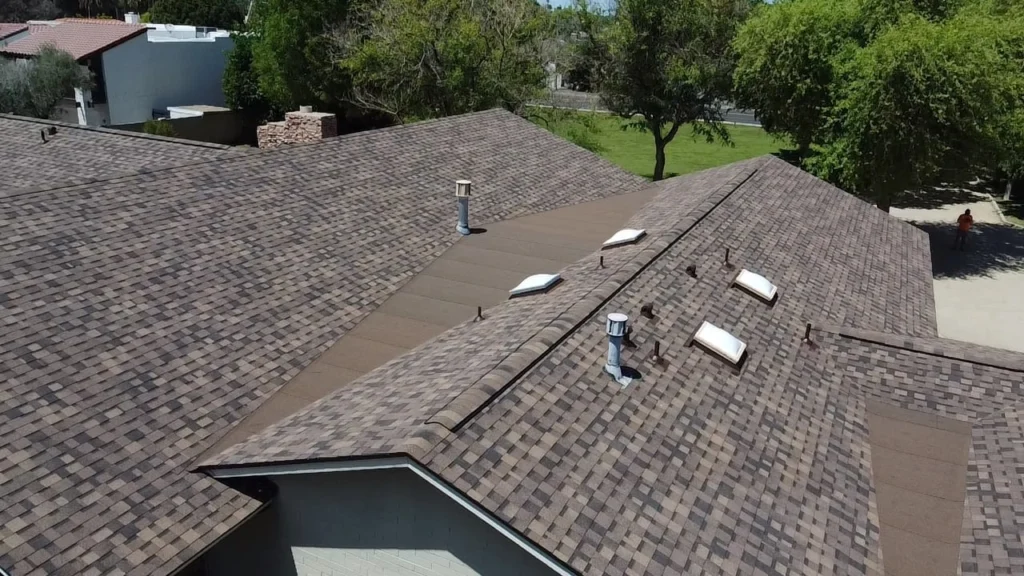
Shingle roof replacement after storm damage
What was wrong. Storm damage to the shingle roof.
What we did. Replaced the whole roof: new shingles, flashing and accessories.
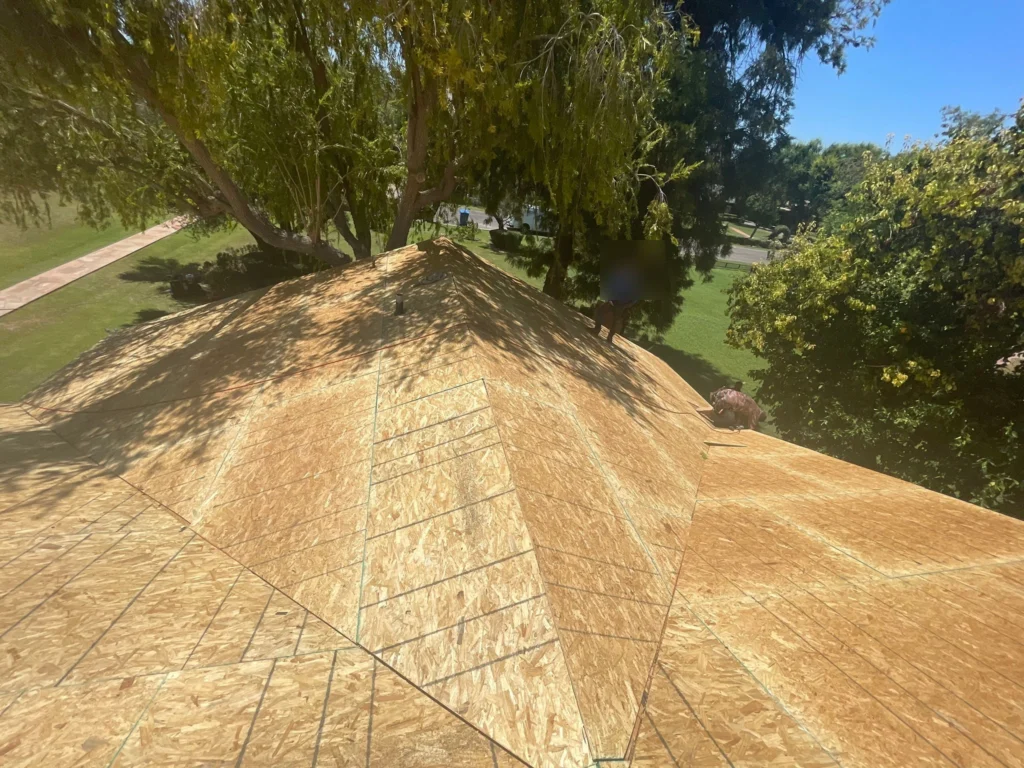
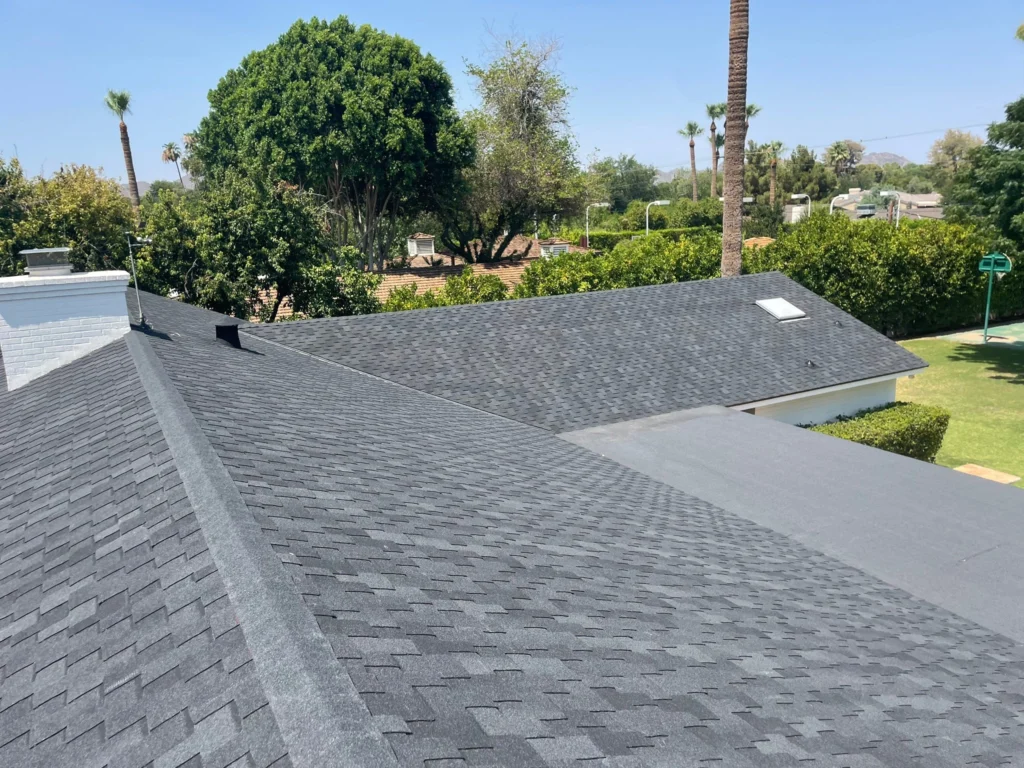
Shingle roof replacement after storm damage
What was wrong. Storm damage to the shingle roof.
What we did. Replaced the whole roof: new shingles, flashing and accessories.
Roofing in Phoenix?
Fifteen villages and many roof markets in one city. A free inspection looks at the one roof that matters to you, and says what it needs.